It starts small. A rough patch by the garage door where the car drips salty slush all winter. A few pits on the front steps where the deicer went down. Then the top of the slab starts coming off in flakes.
That flaking has a name. The National Ready Mixed Concrete Association (NRMCA) calls it scaling: “local flaking or peeling of a finished surface of hardened concrete as a result of exposure to cycles of freezing and thawing.” Evansville hands concrete a lot of those cycles. Want to know what’s going on with yours? Start with a free exterior evaluation.
Why Evansville winters are hard on concrete
NOAA’s 1991 to 2020 normals for Evansville Regional Airport count about 90 nights a year at or below 32°F. Only about 16 days a year stay below freezing all day long. That leaves roughly 75 days a year that freeze overnight and climb back above freezing. That last number is our math on NOAA’s figures, not a measured count.
Here’s why it matters. NRMCA explains that when soaked concrete nears freezing, the water inside expands as it turns to ice and puts stress on the concrete. More cycles mean more chance of scaling. Deicers make it worse “by increasing the saturation of concrete at the surface and the number of freezing and thawing cycles.”
For more on the damage itself, see why is my concrete flaking or pitting?
What concrete protection does
Our concrete protection is a clear, penetrating treatment. It’s designed to help reduce water getting into the surface, along with staining and weather wear. Less water soaking in means less water sitting in the pores when it freezes.
We’re a NexaNano Certified Dealer and Applicator, and we use NexaNano’s concrete product. NexaNano describes it as an SiO2 (silicon dioxide) treatment “designed to penetrate porous surfaces while forming a breathable protective barrier.” On concrete, NexaNano says it changes the inner walls of the pores from water-attracting to water-repelling.
Is it a silane or siloxane sealer?
No. NRMCA recommends a breathable concrete sealer or water repellent, and the types it names are silane or siloxane. NexaNano says its product is SiO2 based, which is a different thing. You should know what’s going on your driveway, so we won’t blur the two.
What it won’t do
- It won’t close cracks you already have.
- It won’t lift or level a sunken slab.
- It won’t put back a surface that has already scaled off. It can help protect what’s left.
- It won’t make concrete crack-proof.
That last one matters. A Purdue University study for INDOT found that absorption testing “was able to show the benefits of sealers,” but that freeze-thaw results differed with what the sealer was made of. It also found that once concrete reached a critical level of saturation, “freeze-thaw damage was inevitable.” Protection helps cut down the water and salt that get in. It’s one part of winter care, not all of it.
How long does it last?
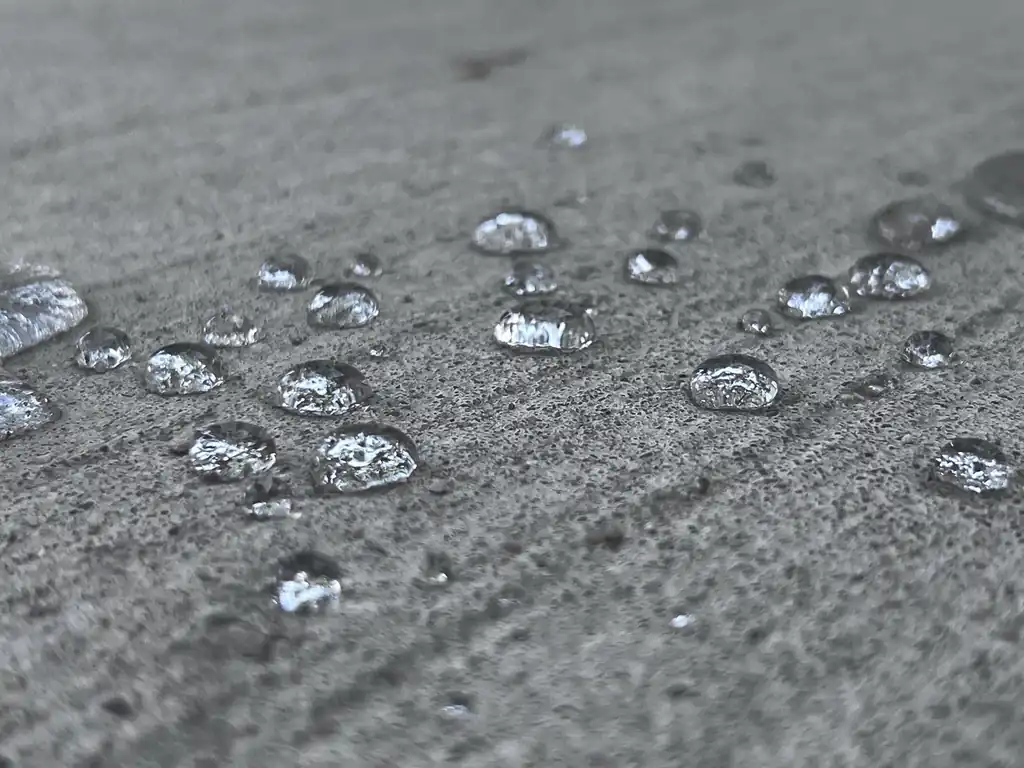
We won’t give you a number of years. NexaNano doesn’t publish a reapplication interval, and we’d rather not guess. What we can give you is a test you can see. Water should bead up on treated concrete. If, down the road, it starts soaking in instead, that’s the time to call us.
How a protection job goes
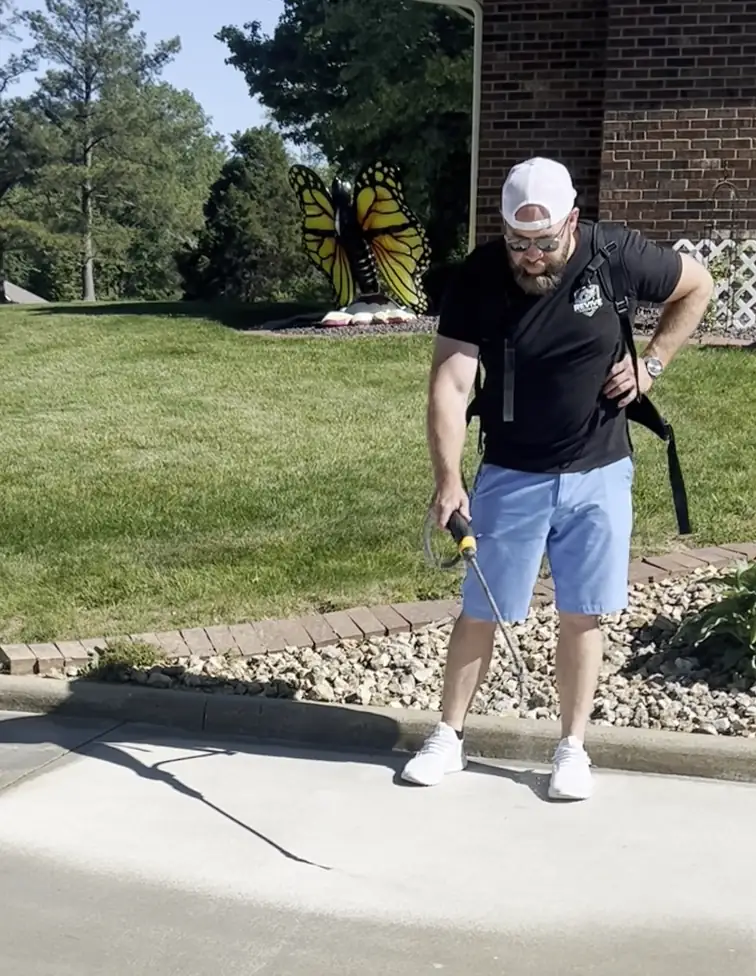
- Evaluation. We look at the concrete and tell you if protection makes sense, or if the slab needs a contractor.
- Cleaning. Dirt, mildew and old stains come off first so the treatment can reach the concrete. That’s our concrete cleaning step.
- Drying. The slab dries out before anything goes on.
- Application. An even spray across the whole surface.
- Water-beading test. We put water on the treated concrete and check that it beads.
NexaNano’s own FAQ covers dry times, cure times and how the finish looks. The short answers are in the questions below.
When to do it
NRMCA says “Late summer with a few dry days preceding application is an ideal time.” In Evansville, NOAA puts the median first fall freeze at October 29. So late summer into early fall is the window to aim for, before salt season starts.
Missed it this year? Read protect concrete now or wait? for the trade-offs.
You probably don’t need this if…
- The slab is broken up, heaving or sinking. Call a concrete contractor first.
- Most of the top layer is already gone. We’ll tell you if what’s left is worth protecting.
- The concrete sits under a roof and never sees rain, snow or salt.
- You want color, shine or a garage floor coating. Ours goes on clear and isn’t meant to change the look.
What happens next
Book your free exterior evaluation. We’ll look at the driveway, walks, steps and patio, tell you which ones are good candidates for protection, and say so plainly if one isn’t. Or call or text Terrance at (812) 664-6222.
Common questions
Will concrete protection stop my driveway from cracking?
No. Protection helps cut down on the water and salt that soak into the surface, which is where scaling starts. It won’t close cracks you already have, and it can’t stop a slab from settling or moving. Purdue research found that sealers differed in how well concrete held up to freeze-thaw. We’d rather tell you that now than after.
Can I still use salt on treated concrete?
Yes, with care. NRMCA calls rock salt (sodium chloride) and calcium chloride acceptable for concrete. It says never to use ammonium sulfate, ammonium nitrate or magnesium-based salts as a deicer. On new concrete, it suggests skipping deicers and using clean sand for traction. Rinsing the salt off when the weather allows helps too.
Will it make my concrete shiny or slippery?
NexaNano says its treatment dries clear, doesn’t leave a shiny film, won’t yellow, and doesn’t make surfaces slippery. The goal is concrete that still looks like concrete. If you want gloss or color, this isn’t the product for that.
How soon can I walk or park on it?
NexaNano says most surfaces are dry to the touch in one to two hours, with full cure in 24 to 48 hours, depending on temperature and humidity. A cool, damp day runs slower. We’ll tell you when it’s fine to walk on and when to park on it again.