
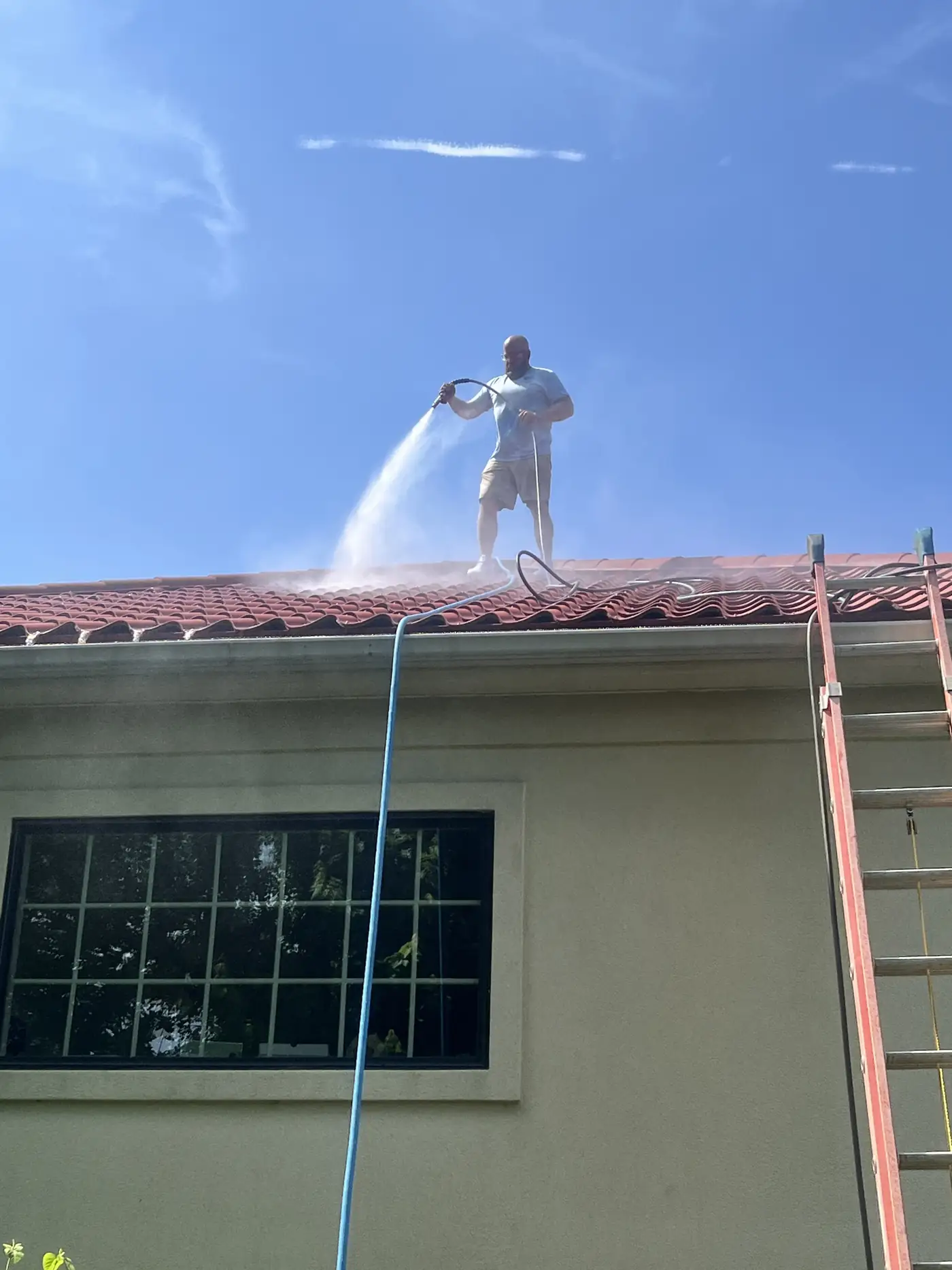
The stucco by the back door has gone gray-green. The soffits have a fuzzy film you can see from the yard. Up top, the roof has dark streaks on the side that gets the least sun.
None of those surfaces want a jet of water. Soft washing is how we clean them. Low pressure carries a cleaning solution onto the surface. The solution loosens the growth and grime. Then a gentle rinse takes it all away.
It’s slower than blasting. It’s also the method that fits a house.
How soft washing works
Think of it as wet, apply, wait, rinse.
- Wet. Plants near the work get plain water first.
- Apply. The cleaning solution goes on at low pressure, matched to the surface.
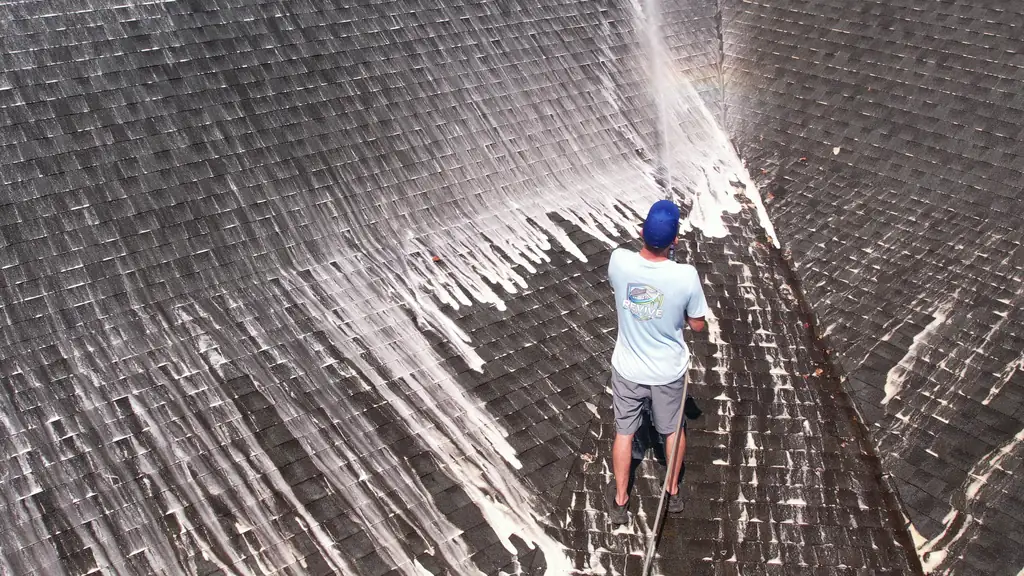
- Wait. The solution needs a little time on the surface to do its job. We don’t let it dry on.
- Rinse. A gentle rinse carries off the solution and everything it loosened.
The difference from pressure washing is where the cleaning power comes from. With a pressure washer, it’s the force of the water. With a soft wash, it’s the solution. The water is just the delivery truck.
Surfaces that suit a soft wash
- Asphalt shingle roofs. InterNACHI says granule loss across a whole roof is usually normal weathering, and that loosened granules get “carried away by runoff.” We don’t speed that up with force. Our roof cleaning page has the full roof process.
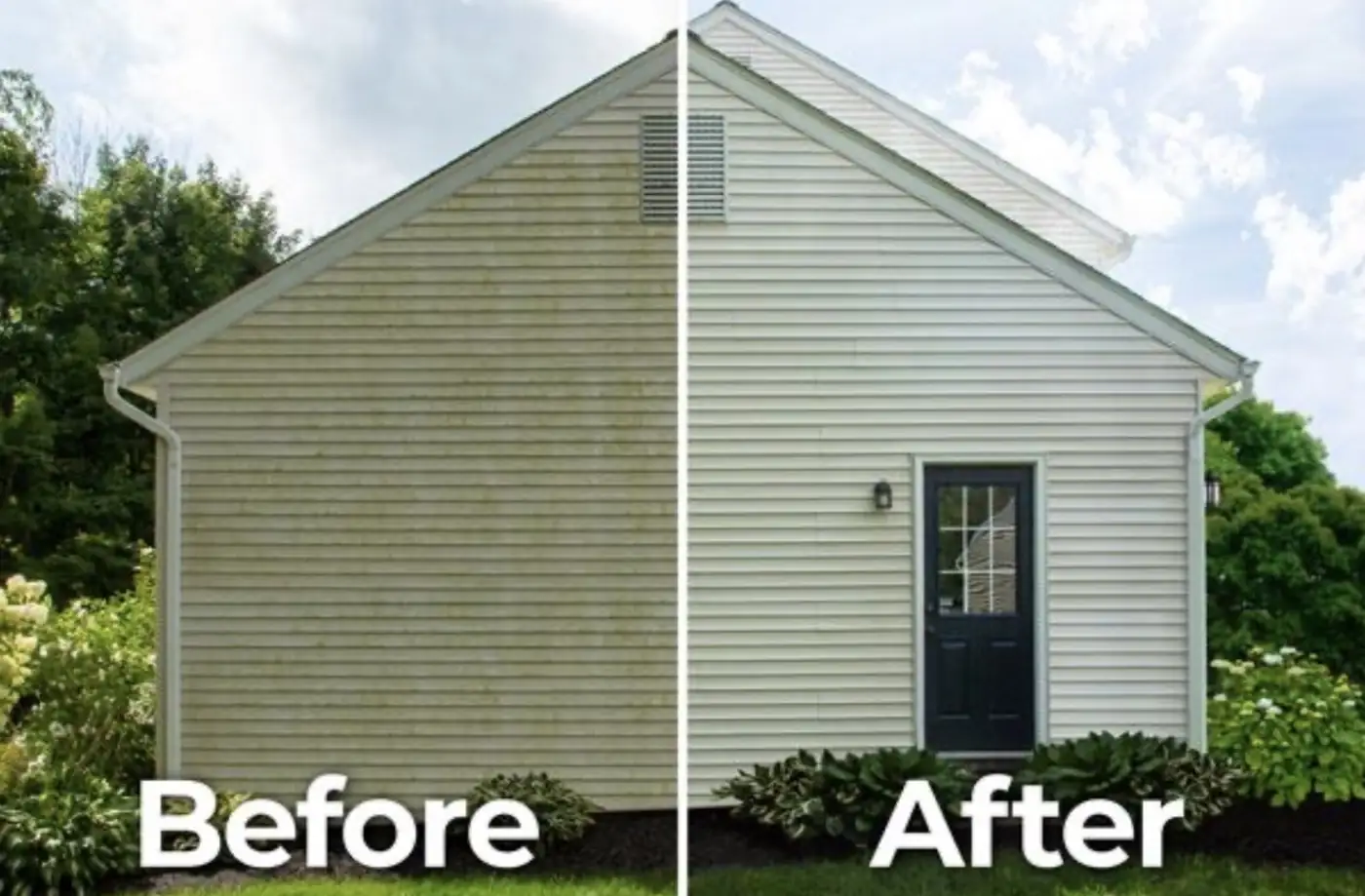
- Vinyl siding. The siding trade group says some makers set limits on both the pressure and the cleaners used on their siding (PEPA). If you know who made yours, tell us and we’ll check. The house washing page explains how we do walls.
- Stucco. It’s textured and porous, so dirt settles into every bump. A solution reaches into the texture without digging at it.
- Painted surfaces and trim. Paint is a thin skin. Force finds every weak edge.
- Soffits and gutter faces. A hard spray aimed up at a soffit sends water toward vents and seams. A soft wash doesn’t.
- Older brick. The Brick Industry Association counts historic significance as a reason for extra care. Old, soft brick gets the gentlest version of this method.
Plain concrete is the exception. It can take force, so it goes on our pressure washing list.
Your plants and yard
Soft washing uses a cleaning solution, so we plan for whatever sits below the work.
- Before we start, plants near the walls get soaked with plain water.
- Pots, cushions and toys get moved out of the rinse path.
- While we work, we watch where the runoff goes.
- When we finish, the plants get another rinse with plain water.
Got something you care about most? A vegetable bed, a fish pond, a shrub your grandmother planted. Point it out when we arrive and we’ll plan around it.
What you’ll notice on the day
We’ll ask you to shut windows and doors and keep pets inside. You’ll see the solution go on, then a pause while it works, then the rinse. Walls, walks and lawn stay wet for a while after. Decks and steps can be slick until they dry, so watch your footing.
Some marks aren’t growth at all. Rust, paint drips and hard-water spots may need a different approach, or may not come out. We’ll tell you up front which marks we expect to lift.
Why clean doesn’t stay clean forever
A soft wash removes what’s growing now. It doesn’t change why it grew. The shade is still there, and so is the damp.
Spring is the wettest stretch of the year here. NOAA’s 1991 to 2020 normals put April and May at about 5.1 inches of precipitation each in Evansville, the two wettest months.
So growth can return over time. North walls, roof slopes under trees and anything near a sprinkler tend to show it first. On roofs, some owners add roof protection after a cleaning to help it stay clean longer. It won’t keep growth away for good, and we won’t say it will.
You probably don’t need this if…
- The dirty surface is concrete. That’s a pressure washing job.
- Your vinyl has a little dust and nothing green. A garden hose may handle it.
- The roof has bare spots, leaks or curling shingles. Cleaning won’t help. You need a roofer.
- Paint is peeling over most of a wall. A painter should go first.
What happens next
Start with a free exterior evaluation. We’ll walk around the house, look up at the roof, and tell you which surfaces need a soft wash, which can wait, and which need someone other than us.
Or call or text Terrance at (812) 664-6222. We’re open Monday to Saturday, 9am to 5pm.
Common questions
Is soft washing just pressure washing turned down?
Not quite. Turning the pressure down on its own would leave most of the grime behind. Soft washing relies on the cleaning solution to loosen growth and dirt. Low pressure is only how the solution goes on and how the rinse comes off. The water carries the mess away. It doesn’t blast it off.
What happens to my flower beds?
We plan for them before we start. Plants near the walls get soaked with plain water first and rinsed again when we finish. Pots and cushions get moved out of the way, and we watch where the runoff goes. If one bed matters more than the rest, show us when we arrive.
How long will it stay clean?
We won’t give you a number, because it depends on shade, trees, moisture and which way each surface faces. Growth can come back over time. Shady sides usually go first, sunny sides last. At the evaluation we’ll show you which parts of your house tend to stay damp.