Your roof isn’t leaking. From the driveway it looks fine. You’d just like it to stay that way.
That’s who roof protection is for. It’s a hydrophobic treatment, which means water beads up and rolls off instead of soaking in. It’s designed to help protect roofing materials from moisture, UV and the weather. We put it on shingles that are still in fair shape, not on roofs that are already failing.
Every job starts with the free exterior evaluation. Call or text (812) 664-6222 to set one up.
What an Evansville roof is up against
Evansville gets 47.91 inches of precipitation a year, with enough to measure on 118 days (NOAA 1991-2020 normals, Evansville Regional Airport). April and May are the wettest months, at just over 5 inches each.
The air stays damp, too. Mean relative humidity here is 70.2%, from NOAA’s 1961-1990 records.
Then winter shows up. Evansville averages 90.4 nights a year at or below 32°F, but only 15.7 days when the high stays that cold. That leaves about 75 days a year when it freezes at night and thaws by afternoon. That’s our math on the NOAA normals, not a measured count. Any water sitting on your roof goes through that cycle again and again.
How roof protection works
We’re a NexaNano Certified Dealer and Applicator, and our roof protection uses NexaNano products. According to NexaNano, they are SiO2 (silicon dioxide) treatments “designed to penetrate porous surfaces while forming a breathable protective barrier.” NexaNano says the idea is to work with the surface “while still allowing trapped moisture vapor to escape,” instead of laying a heavy film on top.
NexaNano also lists the conditions its products are designed for. The list includes “Humid climates,” “Freeze/thaw conditions,” “Heavy rainfall” and “Mold and algae-prone regions.” Look back at the weather numbers above. That’s a Southern Indiana year.
How it looks and how fast it dries
NexaNano’s FAQ says its treatments dry clear, don’t leave a shiny film and won’t yellow. It says most surfaces are dry to the touch in one to two hours, with a full cure in 24 to 48 hours, depending on temperature and humidity.
How a protection job goes
- We look first. At the evaluation we check the roof’s condition. If it needs a roofer, we tell you and stop there.
- We check the rules. Before recommending a treatment, we read your shingle maker’s guidance, plus your HOA rules if there are any. If either one says no, you’ll know.
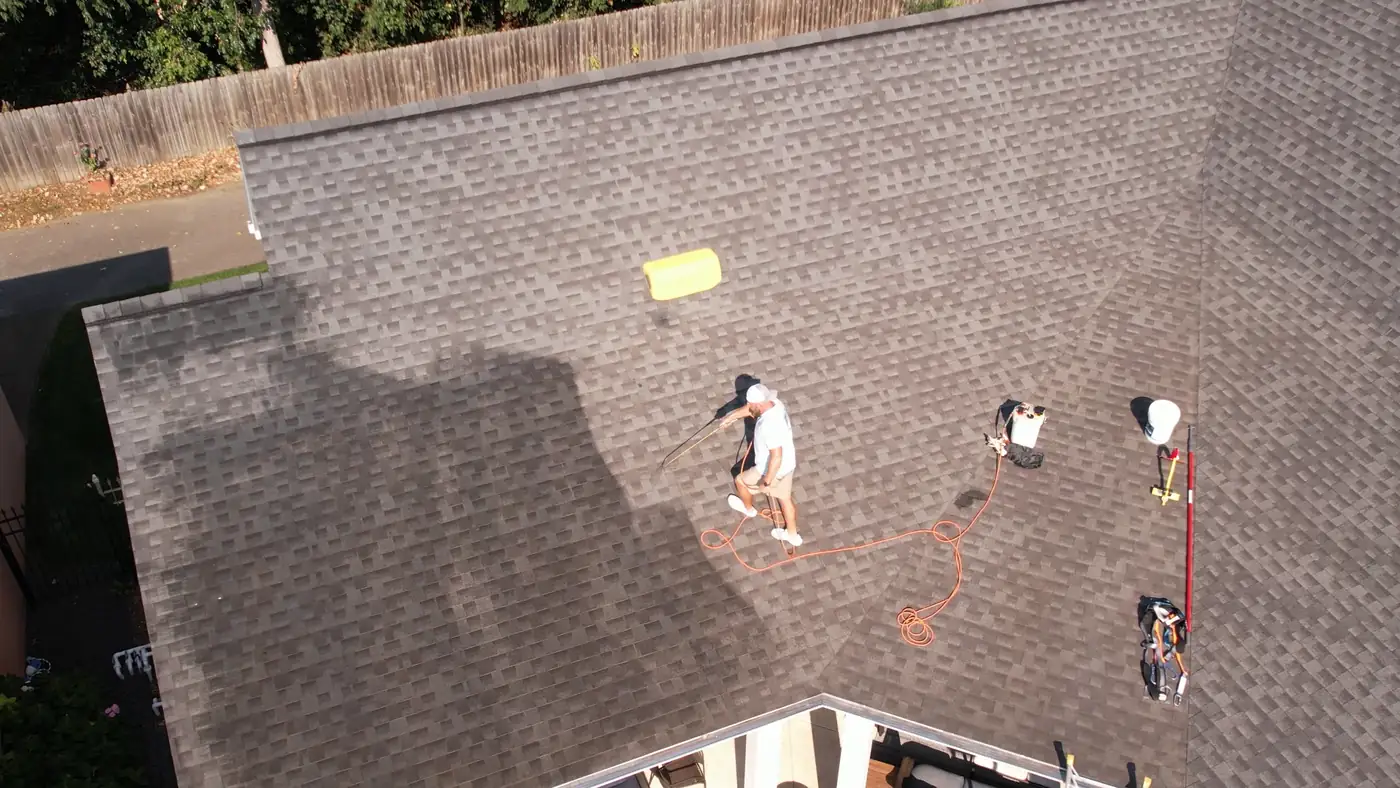
- We clean. Algae, dirt and debris come off first with a low-pressure soft wash. Protection doesn’t go on over grime. More on that on our roof cleaning page.
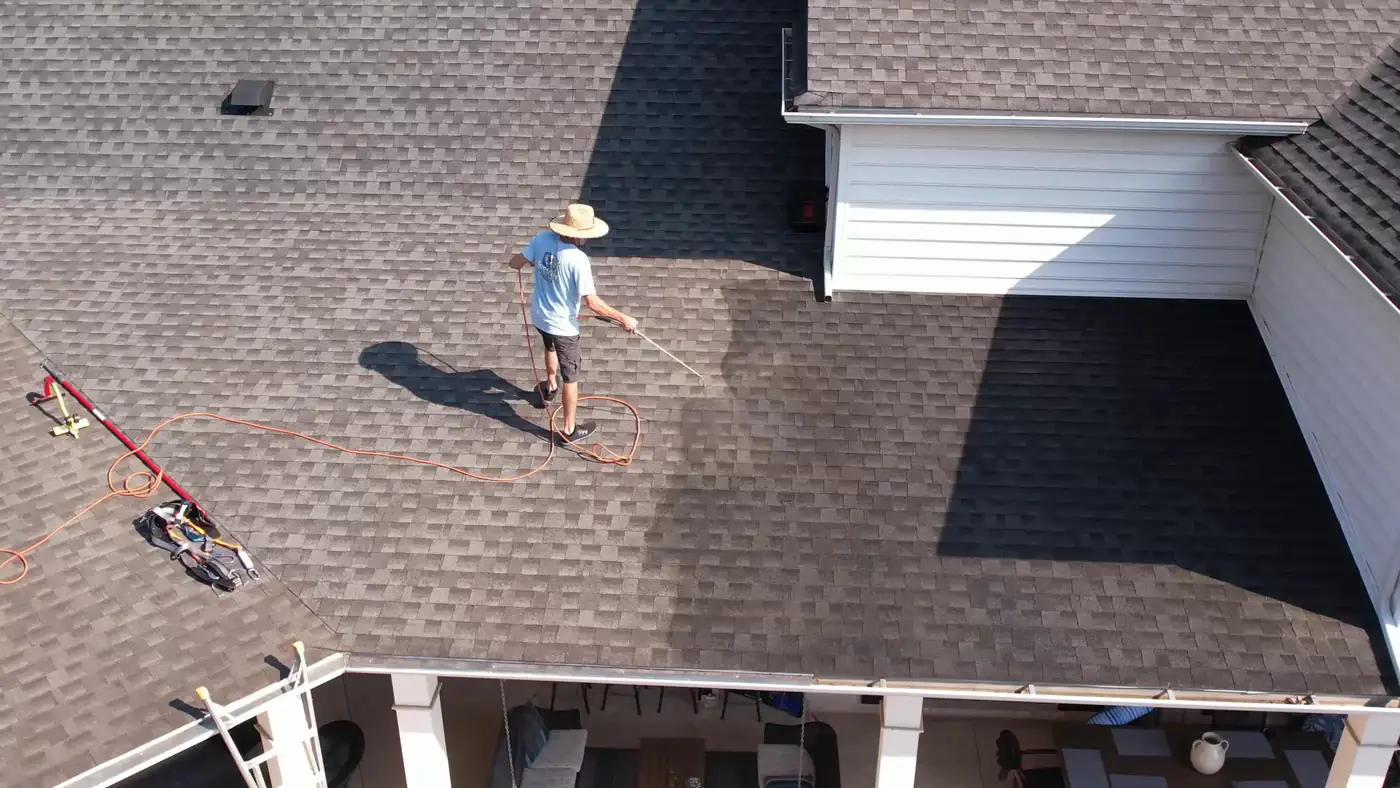
- We treat. Once the roof is clean and dry, we apply the protection.
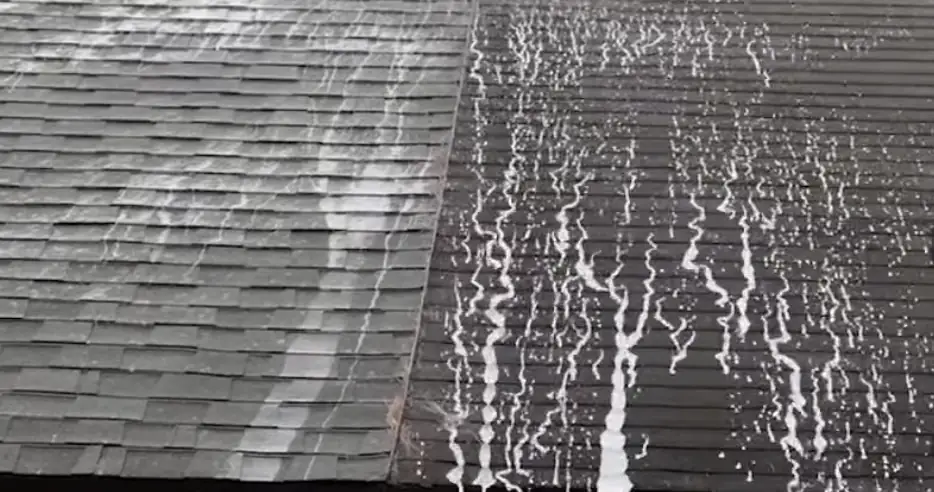
- We test it. After the treatment, we run a water-beading test. Water on a treated surface should bead up and roll off, not soak in.
What roof protection won’t do
- It won’t fix a leak.
- It won’t replace missing or torn shingles.
- It won’t bring back granules that already washed away.
- It won’t turn an old roof into a new one.
- It won’t keep algae off forever. Algae can grow back over time.
If your roof needs a repair or a new roof, we’ll tell you plainly and point you to a roofer. We don’t do either one.
Protection or rejuvenation?
Protection is for shingles that still bend and still hold most of their granules. You’re shielding a roof that’s doing its job.
Roof rejuvenation is for older shingles that have dried out and lost some flexibility. Different roof, different goal.
Not sure which one yours is? Our rejuvenation vs protection guide compares them side by side, and the evaluation settles it.
You probably don’t need this if…
- Your roof leaks, has bare spots or has soft spots in the decking. That’s a job for a roofer.
- Your shingles are brittle, cracked or curling. Ask about rejuvenation, or a roofer, instead.
- Your shingle maker or your HOA rules say no to treatments.
- You plan to replace the roof soon.
- Your roof isn’t asphalt shingle, clay or tile. Those are the roofs NexaNano lists for its Roof Protect product.
What happens next
Book your free exterior evaluation. We look the roof over, take photos and write up a condition summary. Then we tell you what we’d do. That might be protection. It might be a cleaning only, or nothing for now.
Call or text Terrance at (812) 664-6222. We’re at 2821 Broadway Ave in Evansville, open Monday to Saturday, 9am to 5pm, and we work across Southern Indiana.
Common questions
How do I know the protection worked?
We test it before we leave. After the treatment, we put water on the roof and watch what it does. On a treated surface, water should bead up and run off instead of soaking in. That water-beading check is the last step of a protection job. If a spot doesn’t bead the way it should, we’ll point it out.
Does a newer roof need protection?
Need is a strong word. A newer roof in good shape doesn’t need anything right away. Protection is a choice some owners make to help keep a good roof in good shape. If yours is new enough that we’d suggest waiting, we’ll say so. We’d rather you put your money toward what your property actually needs.
Can you treat the roof the same day you clean it?
It depends on the weather. The roof has to be clean and dry before any treatment goes on. How fast that happens depends on the sun, the shade and the humidity that day. We’ll tell you the plan when we book. Sometimes that means two visits instead of one.
Will roof protection stop algae from coming back?
No treatment can promise that, and you should be wary of anyone who says it will. Algae can grow back over time, even on a roof that was just cleaned. Protection is meant to help a clean roof stay clean longer. It doesn’t make algae impossible.